

- High humidity and salt air in the South Carolina Lowcountry necessitate proactive maintenance, such as surface decontamination and mechanical prep, to prevent permanent rust and material degradation.
- Professional storage provides a critical remedy for strict local HOA regulations and zoning restrictions that prohibit parking cargo trailers and extra vehicles in residential driveways.
- Utilizing a facility with 24/7 secured access and on-site wash-down areas offers a superior, cost-effective alternative to home storage or expensive commercial leases.
Proper long-term storage is a proactive process rather than a passive one. It requires a nuanced understanding of how high humidity, salt-saturated air, and relentless UV exposure interact with different vehicle materials, from galvanized steel frames to sensitive automotive clear coats.
Whether managing a fleet of work trailers for a local contracting business or preserving a weekend hobby car, the goal remains the same: ensuring the asset is in the exact same condition when it is retrieved as it was when it was parked. Achieving this requires a combination of correct preparation, environmental mitigation, and the right storage environment.
Common Challenges in Outdoor Vehicle Storage
Many owners encounter significant hurdles when attempting to store large equipment or vehicles on their property. These issues often range from legal concerns with local governing bodies to physical damage caused by the unique elements of the South Carolina coast. Understanding these challenges is the first step in developing an effective protection plan.
HOA and Zoning Restrictions
Most planned communities in the Lowcountry have rigorous standards that prohibit the parking of trailers, branded commercial vans, or non-primary vehicles in driveways or on the street. These rules are strictly enforced to maintain a specific neighborhood aesthetic.
Environmental Wear and Oxidation
Constant exposure to high UV index levels common in the South slowly affects exterior surfaces. This leads to paint oxidation, where the clear coat becomes cloudy and brittle, as well as the drying out of rubber trim, seals, and plastic components. Over time, this can damage interiors and electrical systems.
Pest Infestation and Biological Risks
Vehicles parked on unpaved surfaces or near dense vegetation are highly susceptible to local pests, including rodents and palmetto bugs. In the Lowcountry’s wetland-rich environment, these shelter-seekers frequently nest in engine bays, resulting in costly repairs to wiring and interiors. Preventive parking measures are essential to avoid the significant financial burden of pest-related damage.
Tire Degradation and Structural Stress
Dry rot and flat-spotting are frequent occurrences when a vehicle’s weight sits on one section of the tire for months without movement. In the humidity of Bluffton, the internal structure of the tire can also begin to degrade if it is in constant contact with moist soil. This creates a safety hazard when the vehicle is taken back out on the road.
Corrosion and Salt Accumulation
Even if a vehicle is not driven directly on the beach, the salt air in the Lowcountry is pervasive and carries for miles inland. This microscopic salt residue attracts moisture and holds it against metal surfaces, creating a corrosive environment that accelerates the rusting of trailer frames, suspension components, and brake lines.
Security and Vandalism Vulnerabilities
Residential driveways and side yards rarely offer the level of security needed for high-value equipment. Unsecured trailers are frequent targets for theft, while automobiles can be subject to vandalism or parts poaching when left in unmonitored or poorly lit areas for long durations.
Effective Solutions for Asset Preservation
Addressing these challenges requires a systematic approach to maintenance that goes beyond a simple car wash. High-quality outdoor storage is successful when owners implement a few standard industry best practices designed to counteract the specific stressors of the local environment.
- Surface Decontamination and Protective Waxing: Removing road film, salt spray, and organic debris before storage is essential. This prevents contaminants from etching into the clear coat or dwelling in the crevices of a trailer frame. Applying a high-quality UV-resistant wax provides a sacrificial layer that takes the brunt of the sun’s energy instead of the paint itself.
- Mechanical Preparation and Fluid Stabilization: For automobiles, maintaining fluid levels and using a fuel stabilizer is key to preventing internal engine issues caused by fuel breakdown. For trailers, the focus shifts to lubricating moving parts like hitch couplers, hinges, and jack stands with water-resistant grease to prevent seizing in high humidity.
- Utilizing Specialized Protective Barriers: Breathable, multi-layer covers can mitigate the impact of the sun while allowing moisture to escape, preventing the greenhouse effect that causes mold and mildew. Tire shields or covers are also vital for preventing UV damage to sidewalls and extending the lifespan of the rubber components.
- Proper Braking and Stability Measures: Wheel chocks are preferred over parking brakes for long-term storage to prevent brake pads from bonding to rotors or drums in damp conditions. For trailers, using a leveling block under the tongue jack prevents it from sinking and ensures proper water runoff from the roof, preventing pooling and leaks.
- Interior Climate and Moisture Control: Placing moisture-absorbing canisters inside trailers or cars can prevent the growth of mildew and the musty smell that often plagues vehicles stored in the South. Ensuring all food remnants and trash are removed is the best defense against pests and odors.
- Battery Maintenance and Energy Management: For vehicles with modern electronics, a battery tender or disconnecting the battery entirely can prevent a deep discharge that ruins the battery’s ability to hold a charge. This is particularly important for automobiles that may sit for several months at a time.
- Elevated and Level Parking Surfaces: Storing vehicles on a stable, well-drained gravel or paved surface is critical. This prevents moisture from being trapped against the undercarriage, which is a common issue with parking on grass where the ground stays perpetually damp and promotes rust.
The Science of Long-Term Asset Protection
To truly understand why these steps matter, one must look at the science of material degradation. According to the National Association of Corrosion Engineers (NACE), atmospheric corrosion is significantly higher in coastal regions like Beaufort County due to the presence of chlorides in the air. These chlorides break down the protective oxide layers on metals, leading to rapid pitting and structural weakening.
Furthermore, tire manufacturers often note that tires are designed to be used. The flexing of the rubber during driving helps distribute protective oils throughout the tire’s structure. When a vehicle sits, these oils migrate, leaving the rubber vulnerable to ozone and UV rays. This is why a trailer that looks fine in a driveway can suffer a catastrophic tire failure within the first few miles of a trip. By utilizing a professional storage environment, owners are essentially extending the life of these materials and saving thousands in repair costs.
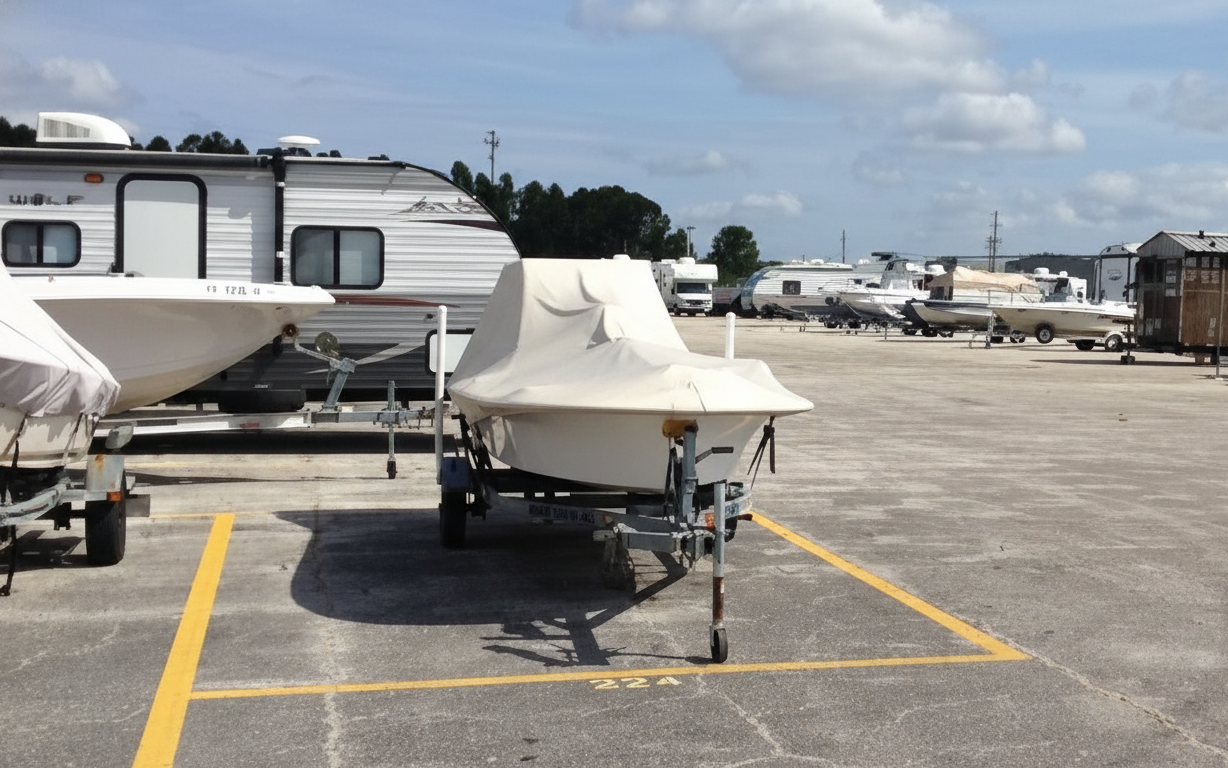
Why Choose Matthews Boat and RV Storage?
While the principles of storage are universal, the facility where you choose to park makes the difference between a chore and a seamless experience. We have built our facility to cater specifically to the needs of the Bluffton community, offering the space and tools that home driveways lack. We understand that storage shouldn’t just be about a parking spot; it should be about adding value to your ownership experience and giving you back your peace of mind.
At Matthews Boat and RV Storage, we take pride in being more than just a storage lot. Our 300+ vehicle capacity ensures that we have the room to accommodate large cargo trailers and automobiles with ease, providing the wide turning radii that make parking stress-free even for those towing for the first time. We understand that your time is valuable, which is why we provide 24/7 secured access. This allows our local contractors to pick up their trailers at the crack of dawn and our car enthusiasts to drop off their vehicles whenever it fits their schedule.
Our most significant advantage is our on-site wash-down area. We know how aggressive the Lowcountry salt air can be, so we provide our customers with the ability to rinse away the day’s grime before they tuck their vehicles away for the season. This feature is a game-changer for those who live in HOA-restricted areas where washing a large trailer at home is not an option. Combined with our high-definition video surveillance and gated perimeter, we offer a level of security and convenience that home driveways simply cannot provide.
We are here to help you reclaim your property and secure your assets. Whether you have a single work trailer or a collection of vehicles, we invite you to experience the convenience and security of our Bluffton facility. We make it easy to protect what matters most to you, so you can focus on your next adventure or project at Matthews Boat and RV Storage. Contact us today to learn more.